Baking Journal
Why do my cookies spread too much?
Find out whether warm dough, a hot tray, inaccurate measurements, or the oven is making your cookies spread, then test one change at a time.
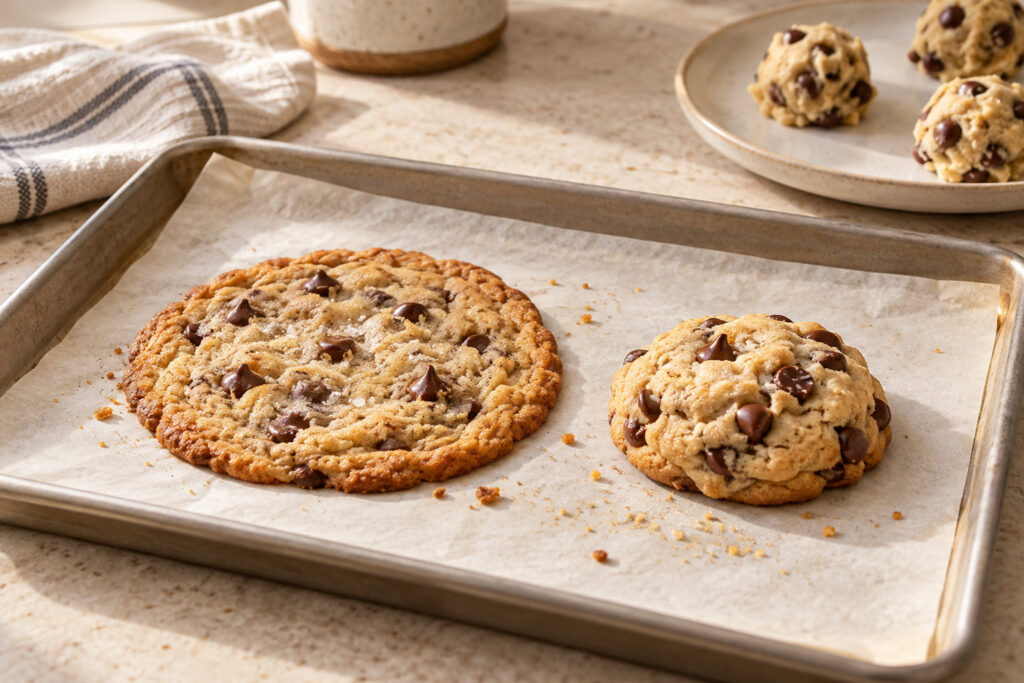
Illustration is AI-generated and is not a photograph of a BakeChronicle kitchen test.
If a cookie that should be thick turns into a thin puddle, start with the dough temperature, the baking sheet, and the recipe measurements. Keep the remaining dough refrigerated while you investigate. Changing several ingredients at once makes the next result harder to interpret.
This guide covers ordinary drop cookies made from a recipe that is intended to hold some thickness. Lace cookies and other deliberately thin styles need a different expectation. A troubleshooting guide cannot tell you how much a particular untested recipe should spread.
Check what the recipe actually asks for
Read the butter instruction before judging the dough. Softened butter, melted butter, and browned butter describe different starting points. A recipe written for melted butter may also specify a cooling or chilling step. Follow that sequence rather than trying to make every dough resemble a creamed-butter dough.
For recipes that call for softened butter, a greasy, partly melted lump is a useful warning. King Arthur Baking identifies excessive butter warmth as one cause of spreading. Its advice also distinguishes chilling the dough from changing the recipe’s ingredient balance.[1]
Check the ingredient package too. A light spread, whipped product, or liquid oil may behave differently from the butter specified in the recipe. Quaker recommends choosing a recipe developed for oil when oil is the fat you want to use.[2] Do not make an equal-volume swap and expect the same cookie.
Set up a small test before baking the rest
- Let a baking sheet cool completely. Use the lining and preparation specified in the recipe.
- Make sure the oven has preheated to the stated temperature. An oven thermometer can help you check whether the actual temperature matches the setting.
- Portion one or two cookies at the recipe’s stated size. Leave them the recommended space.
- Bake and cool them as directed, then assess their shape and texture.
- Write down one change for the next test. Keep portion size, pan, rack position, and baking temperature consistent while testing that change.
A small test uses less dough than committing another full tray. For example, if the first tray was loaded while it was still warm from a previous batch, repeat with a completely cool tray before altering the flour. That comparison answers a specific question about the equipment.
Keep the tray and the dough separate in your diagnosis
A hot sheet can warm the dough before it reaches the oven. Both Quaker and King Arthur recommend cooling sheets between batches.[1][2] Putting cold dough on a warm tray does not give you the same starting conditions as cold dough on a cool tray.
Follow any chilling time in the recipe. If dough has become unusually soft in a warm kitchen, refrigerating it can make it easier to portion and slow early spreading. The time required depends on the dough and how it is stored, so use the recipe’s instructions instead of treating one rest time as universal.
Pan lining is another variable. King Arthur’s comparison found noticeably different spreading on different surfaces, including much greater spreading on foil for the cookie tested.[3] Record the lining because that test concerned a particular cookie and baking setup. Other recipes can behave differently.
Check the flour and sugar measurements
Too little flour can leave a cookie without the structure the formula expects. Too much sugar can also encourage spreading. King Arthur recommends weighing ingredients when diagnosing consistently flat cookies.[4]
Compare your notes with the recipe, including whether you halved the batch or changed the flour. If a recipe states 250 grams of flour, the useful check is whether you actually added that amount. The number is an example of checking the stated formula, not a suggested amount for rescuing any cookie dough.
Our guide to measuring flour for baking explains weighing and the spoon-and-level method. If you suspect a raising-agent mix-up, check baking powder versus baking soda before adding more of either. Ingredient changes should be deliberate and recorded.
When every tray spreads the same way
If measured ingredients, cool pans, and the prescribed chilling step still produce unusually flat cookies, check the oven temperature. An oven that is too cool can allow dough to spread before it sets, a problem noted by both Quaker and King Arthur.[2][4] Repeatedly opening the door adds another uncontrolled variable.
Use a simple baking note: recipe link, ingredient weights, butter condition, chill time, lining, portion size, oven setting, and result. If two tests differ only in pan temperature, you can learn from the result. If you change the sugar, flour, oven, and dough size together, you will have little basis for deciding what to repeat.
Assess cooled, baked cookies without tasting raw dough. The FDA advises against eating raw flour, dough, or batter.[5] Keep the unbaked remainder refrigerated as your recipe directs while you decide on the next test.